


Despite warnings of strong sea swells issued by official entities, throughout the day there was continued disregard for the safety signage installed on the Praia Formosa promenade, with several users ignoring the drowning risk indications and the temporary bans on passage.
Given the situation, FrenteMar Funchal reinforced containment measures, placing chains to secure the metal barriers in an attempt to prevent circulation beyond the areas considered dangerous, especially in lower-lying areas more susceptible to sea surges.
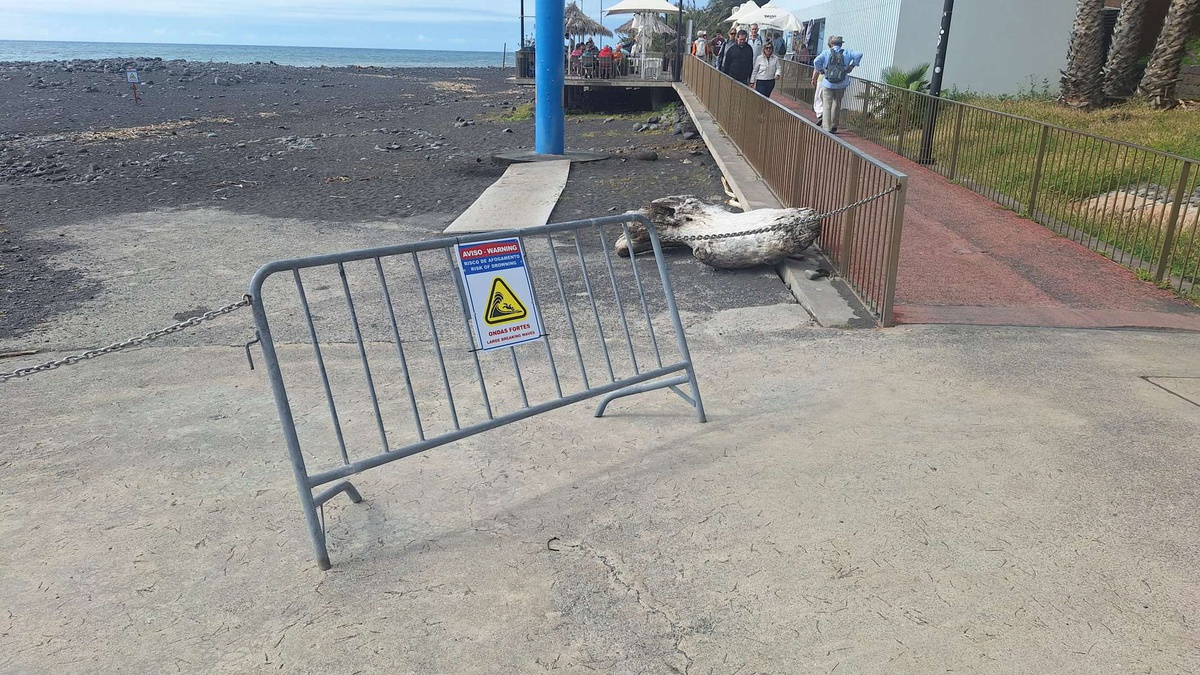
In statements to DIÁRIO, the administrator of FrenteMar Funchal, Marília Andrade, explained that the situation is recurring and occurs practically every day, despite the regular patrolling carried out by lifeguards and the information posted on site.
“The most critical area, and where the most disregard for information is observed, is the zone between Praia Formosa and Câmara de Lobos, for those passing in front of the Orca Praia hotel. It’s a section of the promenade that’s at a lower elevation and, at times, with the peak of the high tide, there are floods. Unfortunately, we see people disregarding the signage every day,” he explained.
According to the administrator, FrenteMar has been working in coordination with the Maritime Police and Civil Protection of Funchal and Câmara de Lobos, and meetings have already taken place to find more effective solutions to prevent unauthorized access to risk zones.
One of the measures being prepared involves changing the existing signage, which will explicitly include the fines for those who disregard the prohibitions and barriers erected for safety reasons. The fine is already stipulated in the legislation; only the implementation of the new signage is needed to legitimize its application on site.
FrenteMar Funchal is once again appealing to the public’s common sense, warning that failure to comply with the guidelines represents an increased risk, especially for children, the elderly, and people with reduced mobility, stressing that the restrictions exist solely to safeguard the physical integrity of users.
